
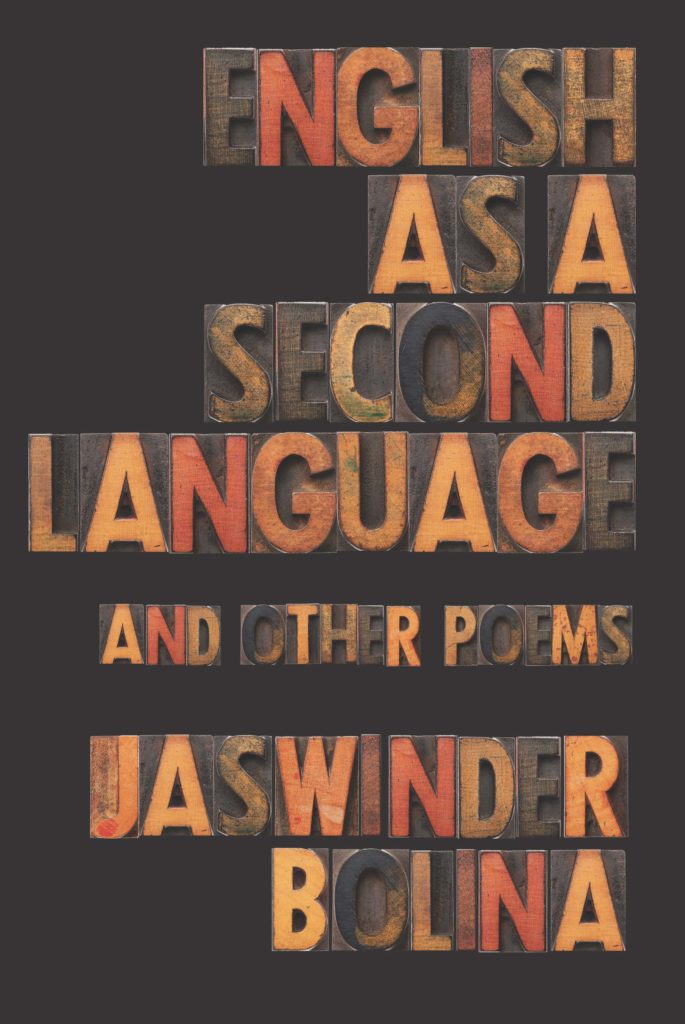
In his fourth book of poetry, Bolina continues to walk “a thread of language like a tightrope across time and space,” as Evie Shockley has remarked. Always delivered with an edge of irony and incomparable wordcraft, Bolina’s lyrics are by turns vividly imagistic (“starlings made an ecstatic / calligraphy against the gloam”), acoustically playful (“the umber end / of summer”), and infused with an acute scrutiny of historical and current events as the specter of American politics haunts the book.
These poems are tightly packed, a whimsical fabric interwoven with snippets of soundbites and telling phrases gathered by a highly alert ear. I don’t mean at all that this is found poetry, but that Bolina’s poems are precisely attuned to the stupidness, bigotry, and willful ignorance encoded into American English. There’s always this “second language” beneath the one we hear — it’s what people aren’t saying, or aren’t quite saying but, of course, they’re actually saying it.
“I’m trying to say something that feels like hearing / your voice for the first time,” writes Bolina in this elegiac collection. “It isn’t working,” he declares, though the effort allows for strange and delightful observations about fatherhood, Chicago’s dive bars, and the persistence of joy”… Bolina has gathered the mundane moments that make up a life and turned them into sparkling gems.
Two titles, two dedications, two tables of contents: Jaswinder Bolina's English as a Second Language and Other Poems is two books in one; which one you read depends on which cover you start with. Read front to back, Bolina’s book begins by ambling down straightforward narrative paths—then zigzagging at the earliest opportunity... Read back to front, Bolina’s book carries a different title: The Usual Entertainment... Bolina’s alternate title underscores his comedy chops, and his penchant for the run-on, single-sentence, keep-the-show-on-the-road poem.
— Christopher Spaide, Poetry Foundation
Ten of the thirty-seven poems in his new collection are elegies – “The Billy Graham Elegy” and “Terrible Elegy,” on the death of Rush Limbaugh, among them (“I believe a person can celebrate the death of a terrible person / and not be a terrible person”), Jesus, a kid with Oedipal issues, and the Twentieth Century, among others. And they are so often comic, making the reader chuckle as often as weep.